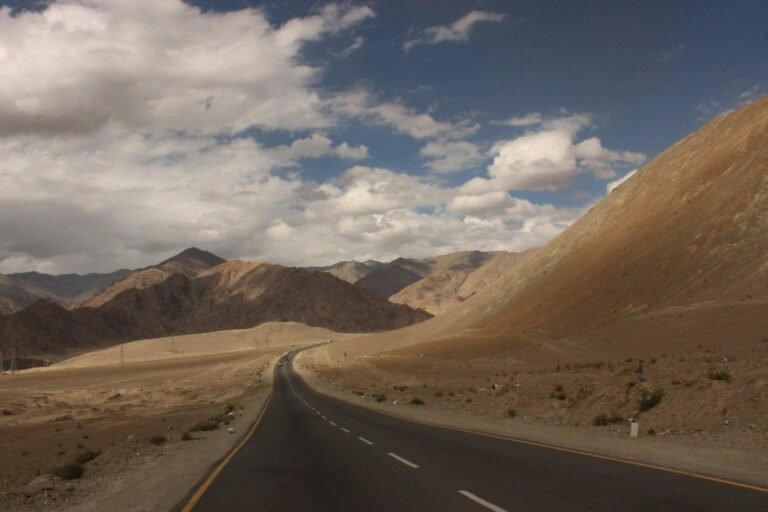
Ladakh sits between 3,000 and 5,300 metres in the rain shadow of the Himalaya, which is why it looks like nowhere else in India: high desert, Tibetan Buddhist monasteries on ridgelines, and lakes the colour of enamel. It is also the one Indian destination where the itinerary has to be built around physiology rather than sightseeing. Get the acclimatisation wrong and the rest of the trip does not happen.
When is the best time to visit Ladakh?
Mid-June to mid-September. That is when both road approaches — Manali–Leh and Srinagar–Leh — are open, when Pangong Tso and Nubra are reliably reachable, and when daytime temperatures sit in the high teens and low twenties.
Outside that window: May and late September are colder, emptier and beautiful, but passes can close at short notice. October to April, Leh is reachable only by air, most high-altitude roads are shut, and night temperatures fall well below freezing. Winter travel in Ladakh is a specialist trip — the frozen Zanskar river walk, snow leopard tracking in Hemis — not a shortened version of the summer one.
How many days do you need in Ladakh?
Seven nights is the practical minimum, and the first two of them are not sightseeing days.
- Days 1–2: Leh, at 3,500 m, doing very little. This is acclimatisation, not padding.
- Days 3–4: Nubra Valley over Khardung La, with a night at lower altitude.
- Days 5–6: Pangong Tso, then back towards Leh via the Chang La route.
- Day 7: Monasteries in the Indus valley — Thiksey at dawn, Hemis, Shey — and departure.
Ten to eleven nights lets you add Tso Moriri and the Rupshu plateau, which is where Ladakh stops feeling like a circuit and starts feeling remote.
How do you get to Ladakh?
Most travellers fly into Leh (IXL), which has direct connections from Delhi and seasonal services from Mumbai, Srinagar and Jammu. Flying straight to 3,500 m is why the first 48 hours matter so much.
The two overland routes are trips in their own right. Manali–Leh is roughly 470 km over five passes and takes two days with an overnight at Jispa or Sarchu. Srinagar–Leh is gentler, crosses Zoji La, and gains altitude more gradually — which makes it the better choice if you are prone to altitude sickness. Both are seasonal.
Altitude: what to actually plan for
Acute mountain sickness is common in Leh and usually mild — headache, poor sleep, breathlessness on stairs. It becomes serious when people climb higher while still symptomatic. The itinerary rules we build to are simple: no high pass on day one or two, sleep lower than the day’s highest point where the road allows, and keep a spare day so a bad night does not cost you Pangong.
Talk to your doctor about acetazolamide before you travel. Anyone with a heart or lung condition, and anyone travelling with young children, should get medical advice specific to high altitude rather than general travel advice.
Permits
Indian nationals need an Inner Line Permit for Nubra, Pangong, Tso Moriri and the Dahanu villages. Foreign nationals need a Protected Area Permit instead. Both are arranged locally in Leh, both need photo ID, and both are issued for specific routes — which is a practical reason to fix the itinerary before arrival rather than improvising.
What a Ladakh trip costs
Our Ladakh itinerary is priced from ₹62,000 per person on twin sharing for the land portion, before flights. The main variables are vehicle type (a shared Innova against a private Xylo makes a real difference on the Khardung La day), hotel category in Leh, and whether Tso Moriri is included — it adds two days and a long drive.